
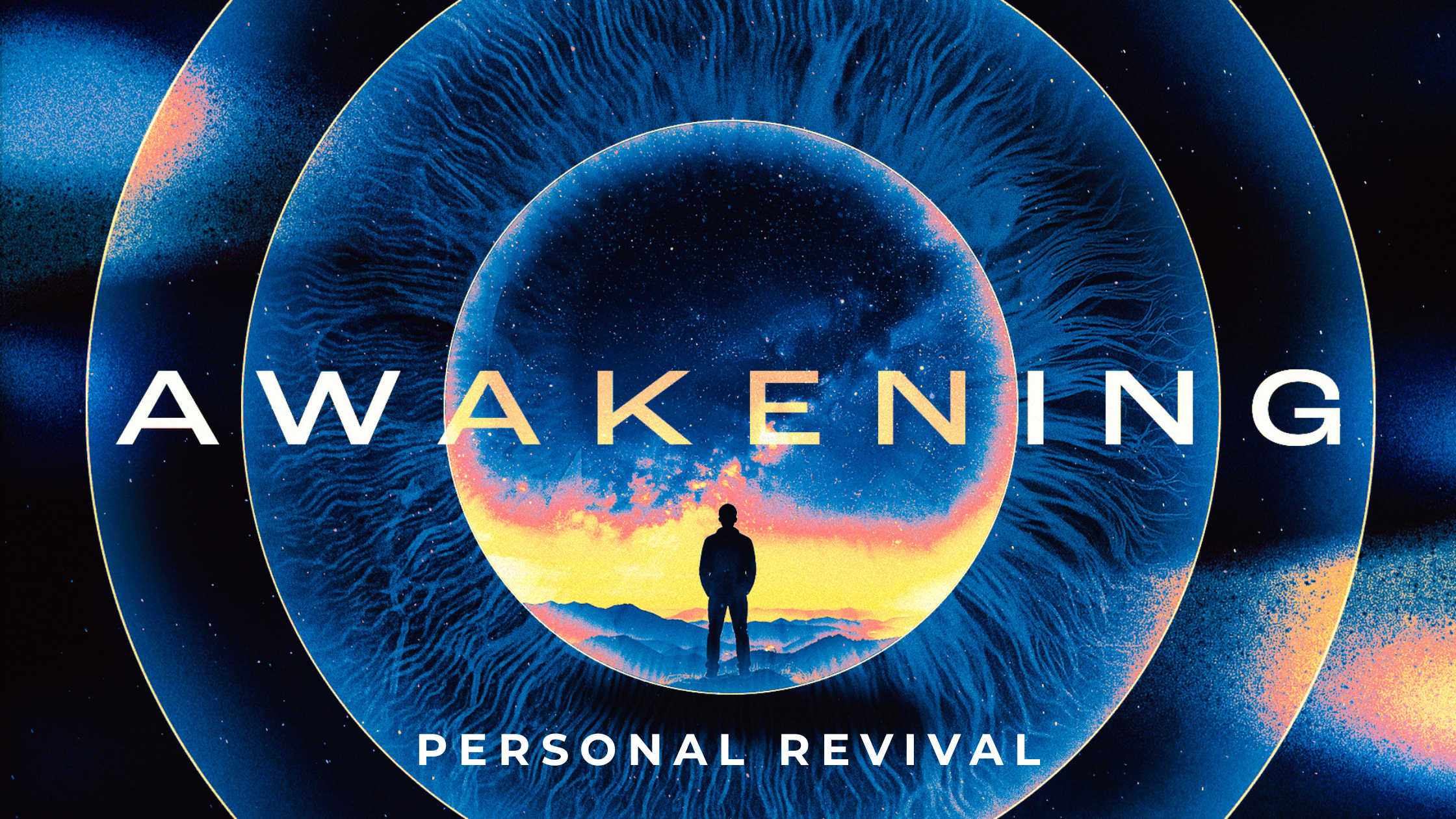
Awakening: Personal Revival

Have you ever experienced a moment so unsettling that it permanently etched itself into your memory? Not traumatic—but deeply disturbing. One of those moments where you can remember exactly where you were, what you saw, maybe even what you smelled.
For me, that moment happened when I was 16.
I had fallen asleep while driving home late one night. I distinctly remember pulling out of a driveway—and the next thing I knew, I woke up in my garage. The car was still running. The garage door was open. And I had no memory of the drive home. No stop signs. No intersections. No train crossings.
I had been on autopilot.
It scared me to my core. And I remember thinking, I never want to be here again.
When Autopilot Becomes Spiritual
What happened to me physically that night can happen to us spiritually.
We can be doing all the right things—going to church, reading our Bibles, serving, giving, joining groups—yet somehow our relationship with God slips into autopilot. We’re moving, but not consciously. Active, but not aware. Faithful on the outside, disconnected on the inside.
And the danger of spiritual autopilot is that you can end up somewhere you never intended to be.
That’s why the prayer for this year is simple but urgent:
“God, wake me up.”
Falling Asleep Isn’t New
Spiritual drift isn’t a modern problem. You see it repeatedly in Scripture, especially in the story of Israel. They would walk closely with God, then slowly drift into complacency—until one day they woke up in the middle of a mess and asked, “How did we get here?”
The psalmist captured this cry perfectly:
“Won’t you revive us again, so your people can rejoice in you? Show us your unfailing love, O Lord.” (Psalm 85:6–7)
Notice who’s praying this. Not unbelievers. Not outsiders. God’s people. Faithful people who realized they had fallen asleep.
Revival Starts Closer Than We Think
There’s a lot of talk today about revival—about God moving out there in the world. But what if revival doesn’t start out there?
What if it starts in here?
Here’s the truth:
Before revival fills a room, it fills an individual heart.
Personal revival matters because corporate revival can’t happen without it.
The Real Enemy: Spiritual Complacency
One of the enemy’s most effective tools isn’t rebellion—it’s complacency.
Complacency is a false sense of security. It says, “I’m fine. I’m checking the boxes.” Meanwhile, parts of our hearts remain unexamined, unexposed, and untouched by God’s light.
That’s how people—good, faithful people—end up shocked by their own sin. That’s how someone wakes up one day and asks, “How did I get here?”
The apostle Paul warned the church in Ephesus about this very thing:
“The light makes everything visible… Awake, O sleeper, rise from the dead, and Christ will give you light.”(Ephesians 5)
Light wakes us up. And while it can be uncomfortable, it’s also merciful.
A Church That Didn’t Wake Up
What’s sobering is that the church in Ephesus didn’t fully listen.
About 30 years later, Jesus addressed them again in Revelation:
“I have this complaint against you. You don’t love me or each other like you did at first. Look how far you have fallen. Turn back to me.”
This wasn’t condemnation—it was an invitation. Personal revival is always available. No matter how far we’ve drifted, God invites us to turn around.
One Awakened Life Can Change Everything
To understand the impact of personal revival, look at Jacob.
Jacob was deeply flawed—deceptive, selfish, and spiritually asleep. Yet in one powerful encounter with God, everything changed. God awakened him, renamed him, and redirected his future.
Through Jacob came the nation of Israel. Through Israel came King David. Through David came Jesus.
All because one man woke up.
You may think, My story isn’t that dramatic. But what if your awakening changes the legacy of your family? Your workplace? Your neighborhood?
We consistently underestimate what God can do through one surrendered life.
Preparing for Personal Revival
So how do we wake up?
Throughout Scripture and church history, personal revival is almost always preceded by three practices:
1. Prayer
Not just asking—but depending. Revival begins when people pray, “God, we need You.”
2. Repentance and Listening
Confession keeps our hearts soft. Listening makes space for God to speak. Revival grows where humility lives.
3. Fasting
Fasting is setting aside something physical to pursue something spiritual. Not giving up sin—but giving up something neutral and daily to reorient our hearts toward God.
Jesus didn’t say if you fast—He said when you fast.
Fasting breaks autopilot. It creates awareness. It reminds us that we need God more than comfort.
A Simple Invitation
As we step into this season, the invitation isn’t heavy-handed or legalistic. It’s relational.
Choose something to fast.
Set aside daily time to pray.
Write down what God speaks.
These practices don’t earn revival—they position us for it.
The prophet Isaiah reminds us of God’s heart:
“I revive the spirit of the humble and restore the courage of the repentant.”
God doesn’t want you waking up one day wondering how everything went so wrong. He wants to wake you up now—with grace, light, and life.
If you feel stuck on spiritual autopilot, hear this clearly:
God sees you. God loves you. And God is calling you awake.
And maybe—just maybe—this year is the year it starts.